Best 12V Refrigerators for a Boat: Top 8 Picks (November 2026)
The best 12V refrigerators for boats include the BougeRV 12v refrigerator 23 Quart (best overall for small boats), the VEVOR 12V Car Refrigerator 10 QT for day sails and small cockpits, and the Antarctic Star 12V Refrigerator Electric Cooler 68QT for long trips and liveaboards.
On this page (4 sections)
The best 12V refrigerator for most boats is the BougeRV 23 Quart, because its 45W eco mode and three-level battery protection keep a small house bank healthy while it holds a weekend of food. Pick the VEVOR 10 QT for a tiny cockpit cooler, the Antarctic Star 68QT for long trips with galley space, or the Smad if you anchor off-grid on propane.
A boat changes the fridge question. You have less floor space than a campervan, a battery bank you'd rather not flatten, and a cabin that swings through 30 degrees or more when the wind picks up.
This list covers chest fridges, a full galley unit and one absorption fridge. The first pick is a compressor chest for most sailors.
Every other pick is the best pick for a named need, so you can match it to your boat and your power setup.
If you want the deeper marine picture on sizing and power, our 12v fridge for boat guide walks through it. For campervan builds on the same 12V idea, see the 12v fridge for campervan picks.
Our score weighs specs, features and fit against what you're shopping for: cooling range, power draw, battery protection, footprint and how well each one suits a moving, heeling boat.
Our picks at a glance
-
1

-
2
 Best for day sails and small cockpits
VEVOR 12V Car Refrigerator 10 QT
9.1/10 our score
See it on Amazon -
3
 Best for long trips and liveaboards
Antarctic Star 12V Refrigerator Electric Cooler 68QT
8.9/10 our score
See it on Amazon
- 4
 Check it
BougeRV 30-Quart 12V Fridge Freezer
Best for weekend provisioning - 5
 Check it
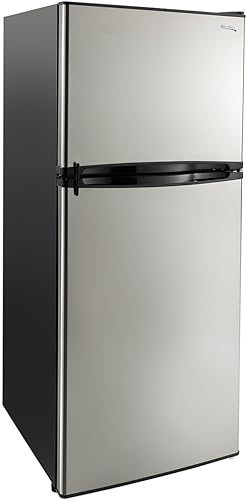
RecPro 10 Cu Ft 12V RV Refrigerator
Best for a boat galley build - 6
 Best for weight-conscious boatsCheck it
- 7
 Check it
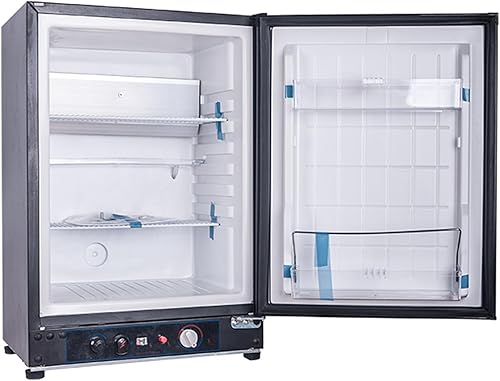
Smad 2.1 Cu.Ft. Propane Refrigerator
Best for off-grid anchorages - 8
 Check it
EDHBay 34-Quart 12V Drawer Fridge
Best for a built-in galley drawer
The best 12V boat refrigerators by need
The BougeRV 23 Quart is the safest all-round pick for a small to mid-size boat. Each other fridge here wins on a specific job, from a 10 quart day cooler to a 10 cubic foot galley build.
Read each write-up as a fit for one kind of sailor, because a fridge that's perfect on a 24 foot trailerable boat can be wrong on a 40 foot liveaboard and the other way round.
BougeRV 12v refrigerator 23 Quart: Best overall for small boats
- 23 quart chest
- 45W eco mode, 60W max
- 3-level battery protection
- Cools 77F to 32F in 15 min
A compact chest fridge that sips power and protects the house bank. Its size fits under a cockpit bench on most trailerable boats.
Pros
- Low 45W eco draw
- Three voltage cutoff levels
- Works at a 30 degree tilt
Cons
- Small capacity for long trips
- Manual defrost
BougeRV suits a weekend cruiser with a modest house bank. Its compressor pulls less than 45W in eco mode and 60W at max, so the daily energy use stays under 1kWh even with its cycle running.
Annual consumption is listed at 118 kWh, which is a useful sanity check against your solar and engine charging.
The three-level battery monitor is the part that matters most on a boat. You choose the voltage where the fridge shuts off, so a long night at anchor doesn't leave you with a dead start battery.
That single feature is why this fridge wins the top spot over slightly bigger boxes.
It cools from 77F to 32F in about 15 minutes and handles a 30 degree tilt, which covers most heeling on a sailboat. At 45 dB it's quiet enough for a cabin berth.
The grey chest measures 22.68 by 12.6 by 12.97 inches and weighs 22.27 lb, light enough for one person to move between the dock cart and the cockpit bench.
The trade-off is capacity: 23 quarts is a weekend's food, not a month's. The manual defrost means you'll empty it and wipe it down now and then.
Measure your bench space before you buy.
VEVOR 12V Car Refrigerator 10 QT: Best for day sails and small cockpits
- 10 quart mini freezer
- App and touch control
- USB charging port
- Cools 68F to -4F in 15 min
The lightest and smallest pick here. It fits in a lazarette or beside the helm and still freezes ice for the cooler.
Pros
- Only 15 lb
- USB port for phone charging
- Three-level battery protection
Cons
- 10 quart capacity
- App control needs a phone nearby
VEVOR's 10 QT suits a daysailer or a small powerboat where every inch counts. It weighs 15 lb and fits behind a seat or in a lazarette.
At 15 by 26 by 20 inches its footprint is small enough to slide under a cockpit seat on many boats.
It still reaches -4F, so you can make ice for the cooler or keep a few fillets frozen. The touch panel sets the temperature, and the app lets you check it from the helm without lifting the lid.
A USB port at the bottom of the display charges your phone, which saves a socket in a crowded panel.
Its 12/24V DC and AC adapters mean you can run it off the boat's socket at the dock and the battery at sea. Three-level battery protection guards the bank, and it stays stable at a 45 degree tilt, the best heel rating here.
The 10 liter cabinet can be set as either fresh food or freezer space.
What you give up is volume. Ten quarts holds a few drinks and a lunch, not a family's provisions.
The automatic defrost is a small plus over the BougeRV chests. It's the pick for short outings and backup ice, not the main galley fridge.
Antarctic Star 12V Refrigerator Electric Cooler 68QT: Best for long trips and liveaboards
- 68 quart dual zone
- Wheels and reinforcement rods
- 3-level battery protection
- Cools 77F to 32F in 15 min
A big dual-zone cooler for boats with a permanent spot and a strong battery bank. The wheels help you move it between dock and deck.
Pros
- Dual storage zones
- Wheels for moving
- Child lock on the panel
Cons
- 37.5 lb empty
- Large footprint
Antarctic Star's 68QT is the biggest chest pick and suits a liveaboard or a long coastal trip. Its dual zone stores drinks and frozen food separately under one temperature control.
The cabinet gives 64 liters of capacity, split by a built-in divider so bottles don't end up crushed under frozen meat.
The wheels and reinforcement rods make it easier to roll from the dock to the deck and back. That matters when you're loading a week of provisions in one trip.
At 37.5 lb empty it's too heavy to carry far by hand, so the wheels earn their place.
It cools from 77F to 32F in 15 minutes and reaches -4F in about 50 minutes. A child lock stops the panel from being bumped when crew move past it, and the bottom drain plug makes cleaning simple.
The adjustable shelves and freezer light help you find things in a dark saloon.
The cost is weight and space: a footprint 30.9 inches deep and 18.7 inches tall. Check it fits your saloon or cockpit before ordering.
It also needs a healthy battery bank to run a large cabinet, so budget for charging as well as the fridge.
BougeRV 30-Quart 12V Fridge Freezer: Best for weekend provisioning
- 30 quart chest
- 45W eco mode, 60W max
- 3-level battery protection
- Cools 77F to 32F in 15 min
The 23 Quart's bigger sibling. Extra height buys more food room without widening the footprint.
Pros
- Same footprint as the 23 Quart
- Removable partition board
- Quiet 45 dB operation
Cons
- Taller than the 23 Quart
- Manual defrost
The BougeRV 30 Quart is the step up from the 23 Quart when you need more food room. It uses the same 22.68 inch depth and 12.6 inch width, so a spot that fits one usually fits the other.
That makes it an easy upgrade if you already know the 23 Quart fits your bench.
The extra height goes to food: 15.53 inches tall against 12.97. A removable partition board lets you split fridge and freezer space, so drinks stay cold while meat stays frozen.
The 28 liter cabinet is listed as both fresh food and freezer capacity, so the whole box swings between the two jobs as you set the temperature.
It runs at the same 45W eco draw and 60W max, with the same three-level battery protection and 45 dB noise. The 30 degree tilt rating carries over too.
Annual energy use is listed at 220 kWh, higher than the 23 Quart's 118 kWh, so the bigger box costs you more in daily charging.
Choose it over the 23 Quart only if the extra height clears your stowage. If the space under your bench is tight, the shorter 23 Quart is the safer fit.
Both need manual defrost.
RecPro 10 Cu Ft 12V RV Refrigerator: Best for a boat galley build
- 10 cubic feet
- Frost-free double door
- Reversible doors
- Stainless steel finish
A full-height galley fridge for a boat with a real kitchen. It needs a large house bank and a 24 inch doorway to fit aboard.
Pros
- Frost-free operation
- Reversible doors
- Adjustable shelves
Cons
- Needs a large battery bank
- 59 in tall cabinet
The RecPro 10 Cu Ft is for a boat with a real galley, not a cockpit cooler. It's a full-height, frost-free double-door fridge that mounts like a household unit.
The stainless steel finish and reversible doors let it pass as a proper galley appliance rather than a camping box on a bench.
It runs on 12V DC only, drawing about 7 amps at startup and 1 amp once at temperature. That's manageable on a large bank, but a small boat's single battery won't carry it.
RecPro suggests pairing it with deep-cycle batteries and solar for off-grid use. The vent-free design means it doesn't need the venting an absorption fridge does.
Reversible doors and adjustable shelves help it fit a galley layout, and there's a base drawer for small items. The frost-free design means no ice build-up to scrape.
Annual energy use is listed at 210 kWh, and the electronic lock keeps the door shut when the boat heels.
The catch is size: 59 inches tall and 26 inches deep, and it needs a 24 inch or wider doorway to get aboard. This is a project, not a drop-in cooler.
Our car refrigerator picks show the smaller plug-in options if that's too much fridge.
VEVOR 12 Volt Refrigerator: Best for weight-conscious boats
- 42.3 quart EPP body
- App control
- 3-level battery guard
- Cools 68F to 32F in 18 min
A lightweight 40 liter chest with a foam-style shell. It saves pounds on a small boat without giving up much food room.
Pros
- 17.9 lb for 40 liters
- Storage bag included
- Three-level battery guard
Cons
- Top range stops at 50F
- No freezer range below 14F
VEVOR's 42.3 QT is the weight saver. Its EPP foam shell brings it to 17.9 lb for 40 liters, so a small boat or a tender doesn't carry a heavy steel box.
The foam also resists cracking under the vibration of a day on the water, and the fridge comes with a storage bag for carrying it aboard.
It holds 40 liters of food and drinks, cools from 68F to 32F in 18 minutes, and stays light enough to pass hand to hand over the lifelines. The app control and three-level battery guard work like the smaller VEVOR's.
Annual energy use is listed at 156 kWh.
The temperature range is the trade-off. It runs 14F to 50F, so it refrigerates and lightly freezes but doesn't reach the deep freeze of the BougeRV picks.
For a boat that mostly needs cold drinks and fresh food, that's fine. It also runs on 12/24V DC only, so check your charging setup matches.
Pick it when pounds matter more than freezing power. Skip it if you want to keep bait or fillets solidly frozen for a long trip.
Smad 2.1 Cu.Ft. Propane Refrigerator: Best for off-grid anchorages
- 12V, 110V or LPG
- Absorption cooling
- Reversible door
- Removable shelves
A three-way fridge for boats that sit at anchor without solar. Propane keeps food cold when the battery bank is low.
Pros
- Runs on propane
- Silent absorption cooling
- Removable shelves
Cons
- Slow 6 to 8 hour first cool
- Needs ventilation for gas use
The Smad is the odd one here and the right one for a specific sailor: the boat that anchors for days without solar or shore power. It runs on 12V, 110V or LPG, and propane keeps food cold when the battery bank is low.
The 2.12 cubic foot cabinet holds enough for a couple on a short cruise.
It's an absorption fridge, so it's silent at 0 dB. It's also slow: Smad says it needs 6 to 8 hours to cool from 90F to 32 to 50F on first use.
Plan to start it the day before you provision. The temperature runs 32 to 50F on the gas and electric controls, so it refrigerates but doesn't freeze.
It needs a level surface within 5 degrees of horizontal, because the cooling unit blocks at steeper angles. That rules it out as a fridge that stays put while you sail heeled.
It also needs a vented compartment for gas use and the included pressure regulator.
The removable shelves and adjustable feet help it sit steady on a locker floor. If you want a simple 12V chest for day sailing, the BougeRV is the easier pick.
This one earns its place at anchor.
EDHBay 34-Quart 12V Drawer Fridge: Best for a built-in galley drawer
- 32 quart drawer
- Stainless steel shell
- 3-level battery protection
- Memory chip after power loss
A slide-out drawer that fits under a counter. It frees upper galley space but needs a wide cabinet opening.
Pros
- Drawer slides out under a counter
- Stainless steel case bolts down
- Memory chip restores settings
Cons
- 29 in depth needs a wide opening
- Lowest score in this group
The EDHBay 34 Quart is a drawer fridge for a galley refit. It slides out under a counter, freeing the space above for a worktop or storage.
The stainless steel outer shell and aluminum inner shell give it a solid feel that suits a built-in install.
It's built to stay put: a stainless steel case with bolted connections can be fixed to the boat, and a memory chip restores the last settings after a power cut. Three battery protection levels guard the bank.
The easy-lock latch and LCD touch panel are easy to use with wet hands, and the drawer orientation keeps cold air from spilling out when you open it.
Its temperature range runs -4F to 68F, so it can refrigerate or freeze. The energy-saving eco mode helps when you're on the hook.
The 32 quart cabinet holds around 40 cans of drink.
The trade-off is the install. At 29 inches deep it needs a wide cabinet opening, and the drawer design limits how you load it.
It's the lowest score here for a reason: great in the right galley, awkward anywhere else.
| Product | Best for | Capacity | Power | Size (D x W x H) | Our score |
|---|---|---|---|---|---|
| BougeRV 12v refrigerator 23 Quart | overall for small boats | 23 quarts | 45W eco, 60W max | 22.68 x 12.6 x 12.97 in | 9.4 |
| VEVOR 12V Car Refrigerator 10 QT | day sails and small cockpits | 10 liters | 9.1 | ||
| Antarctic Star 12V Refrigerator Electric Cooler 68QT | long trips and liveaboards | 64 liters | 8.9 | ||
| BougeRV 30-Quart 12V Fridge Freezer | weekend provisioning | 30 quarts | 45W eco, 60W max | 22.68 x 12.6 x 15.53 in | 8.6 |
| RecPro 10 Cu Ft 12V RV Refrigerator | a boat galley build | 10 cubic feet | 12V DC only | 8.5 | |
| VEVOR 12 Volt Refrigerator | weight-conscious boats | 40 liters | 8.1 | ||
| Smad 2.1 Cu.Ft. Propane Refrigerator | off-grid anchorages | 2.12 cubic feet | 12V DC, 110V AC or LPG | 8.0 | |
| EDHBay 34-Quart 12V Drawer Fridge | a built-in galley drawer | 32 quarts | 29 x 17 x 10 in | 6.7 |
How to size a 12V fridge for your boat
Size the fridge to your typical trip length and your house bank, not to the biggest box that fits. A 10 to 30 quart chest covers most day and weekend sailors.
A 40 to 68 quart chest or a full galley fridge suits liveaboards and long coastal runs.
Start with where it will sit. A cockpit bench, lazarette or under-berth space sets a hard limit on height and depth.
The BougeRV 23 Quart needs about 13 inches of height and 22.7 inches of depth. The Antarctic Star 68QT needs nearly 31 inches of depth.
The RecPro needs 59 inches of height and a 24 inch doorway.
Then count the people aboard. A couple on a weekend needs far less than a crew of four on a two-week passage.
Every extra quart of cabinet is extra weight and extra power draw.
What power draw means on a boat battery
Look at the eco-mode wattage first. The BougeRV chests run under 45W in eco mode, and the VEVOR 42.3 QT runs on a similar 12/24V DC setup.
That's the number that decides how long your bank lasts between charges.
A fridge cycles on and off, so its real daily use is below its rated wattage times 24 hours. The BougeRV 23 Quart says it uses under 1kWh a day even in max mode.
Size your solar or engine charging to replace that plus your other loads.
The annual energy figure is the better planning number. The BougeRV 23 Quart lists 118 kWh a year and the VEVOR 10 QT lists 45 kWh, so the small cooler costs far less to run over a season.
A 100Ah house bank holds roughly 1.2 kWh, so a fridge rated under 1 kWh a day leaves headroom for lights and instruments.
Battery protection and low-voltage cutoff
Every compressor fridge here except the Smad has three-level battery protection. You set the voltage where the fridge shuts off, so it stops before it drains the start battery.
On a boat with a separate house bank, set the cutoff above the point where your electronics start to brown out.
Then charge the bank each day. The cutoff protects the battery, but it doesn't keep food cold, so plan charging around the fridge's duty cycle.
A short engine run in the morning and solar through the day covers most coastal sailing. A three-way fridge like the Smad takes propane off the battery question entirely.
Chest, drawer or full galley fridge?
A chest fridge is the easiest fit on most boats. It sits on a bench or in a locker and handles heel well.
The BougeRV and Antarctic Star picks are chests. A top-opening lid also keeps cold air inside when you open it, which matters in a hot cabin.
A drawer fridge like the EDHBay frees counter space but needs a wide cabinet opening. A full galley fridge like the RecPro needs a big bank and a doorway wide enough to get it aboard.
It also needs a permanent spot and a secure mount for a 52 lb box.
Match the form to your boat first. A chest that fits is better than a galley fridge that doesn't.
For a small boat with no spare cabinet, the chest is usually the only realistic choice.
Absorption vs compressor cooling on the water
Compressor fridges cool fast and handle tilt. They draw battery power but keep food cold in a hot cabin.
Every pick except the Smad uses a compressor. The BougeRV and VEVOR boxes cool to fridge temperature in under 20 minutes, which means you can load warm drinks and have them cold by dinner.
An absorption fridge runs silently on propane or 12V and needs a level surface within 5 degrees. The Smad's 0 dB operation and gas option suit a boat that sits at anchor.
It's slow to cool and not the pick for a boat that sails heeled most days.
Think about how you use the boat. A daysailer that returns to the dock each night is fine with a small compressor chest.
A boat that swings on the hook for a week without sun needs the gas option or a big bank. The middle case, a weekend cruiser with some solar, is where the BougeRV chests fit best.
Marine setup and care for a 12V boat fridge
Mount the fridge where it can't slide, shade it from sun, and give it airflow. A fridge wedged under a bench with no vent will run harder and draw more power than one with room to breathe.
BougeRV warns that direct sunlight can warp the door on its chests. On a boat with big windows, keep the lid out of the sun or fit a cover.
A towel over the lid at midday is a cheap fix.
Secure the fridge so it can't tip when the boat heels. The EDHBay has bolted connections for this.
For a chest, a strap or a snug locker does the job. Check the tilt rating too: the BougeRV chests run at up to 30 degrees and the VEVOR 10 QT at 45 degrees.
An absorption fridge like the Smad needs to stay within 5 degrees, so it belongs on a boat that sits level at anchor.
Pre-chill food at home before you load it. A fridge that starts cold uses less battery to hold temperature.
That's the cheapest upgrade to your setup, and it costs nothing but time.
Keep the lid closed and plan what you need before opening it. Every minute open lets cold air out and pulls more power from the bank.
A top-opening chest helps here, because cold air stays in when the lid lifts.
Wipe the inside dry when you defrost a manual chest, and check the drain plug on the Antarctic Star to clear condensed water. A dry cabinet runs more efficiently than one with ice building up on the walls.
Which 12V boat refrigerator should you buy?
Buy the BougeRV 23 Quart if you want the safest all-round fridge for a small or mid-size boat. It covers a weekend of food, runs at 45W in eco mode and protects the house bank with a three-level cutoff.
It's the pick most sailors should start with.
Go bigger with the Antarctic Star 68QT for a liveaboard or long trip, or the BougeRV 30 Quart when the extra height clears your stowage. Pick the VEVOR 10 QT for day sails and the VEVOR 42.3 QT when pounds matter more than deep freezing.
Choose the RecPro 10 Cu Ft only for a full galley build with a large bank. Pick the Smad when you anchor off-grid and want propane.
The EDHBay drawer fridge suits a galley refit with the cabinet space to match.
Whatever you pick, size it to your trip and charge the bank to match the fridge's daily draw. That pairing matters more than any single spec.
Our top 3 picks at a glance
-
1
-
2
Best for day sails and small cockpits
VEVOR 12V Car Refrigerator 10 QT
9.1/10 our score
See it on Amazon -
3
Best for long trips and liveaboards
Antarctic Star 12V Refrigerator Electric Cooler 68QT
8.9/10 our score
See it on Amazon
Frequently asked questions
Will a 12V refrigerator drain my boat battery?
A compressor fridge draws about 45 to 60W in eco mode. A 100Ah house battery covers a night easily.
Use the fridge's low-voltage cutoff to protect the bank and charge from solar or the engine each day.
Do 12V boat fridges work when the boat heels?
Compressor chest fridges handle tilt well. The BougeRV models run at up to a 30 degree incline and the VEVOR 10 QT stays stable at 45 degrees.
Absorption fridges like the Smad need a level surface within 5 degrees.
Is a propane fridge a good choice for a boat?
Propane suits boats that anchor for days without solar or shore power. The Smad 2.1 runs silently on LPG or 12V.
Gas needs a vented compartment and a pressure regulator, so follow the install rules closely.
Can I run a 12V boat fridge from a portable power station?
Yes. All the compressor fridges here take a 12V DC cord, and most ship with an AC adapter too.
A power station with a 12V outlet or AC socket runs the fridge at the dock or on a mooring.
How do I keep a 12V fridge cool in a hot cabin?
Shade the fridge and keep it off direct sun. BougeRV warns that direct sunlight can warp the door.
Run it in eco mode, pre-chill food at home and open the lid only when you need something.


